
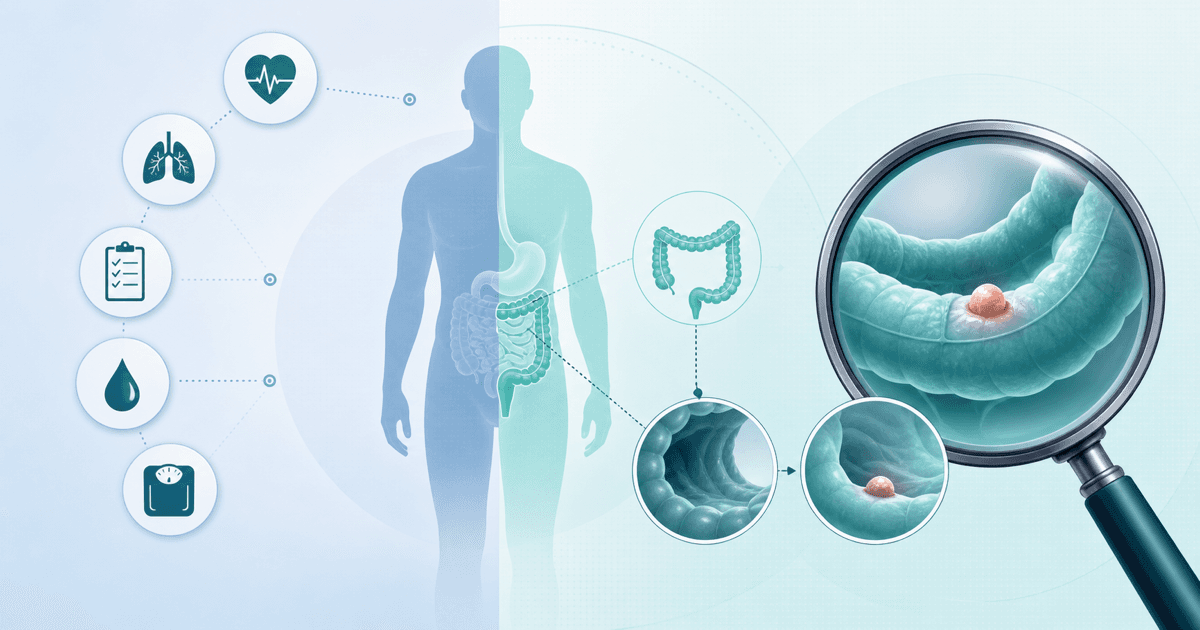
Routine checkups and cancer screening have different purposes
A routine checkup often reviews blood pressure, glucose, cholesterol, and organ function. It may include blood tests, urine tests, an ECG, ultrasound, or chest imaging. These checks can find important health risks. They cannot diagnose every type of cancer.
Cancer screening looks for a specific cancer or precancerous change. It is intended for people without related symptoms. Each test is meant for a defined group. Benefits must be weighed against false results, overdiagnosis, and procedure risks.
A normal checkup means the completed tests found no clear abnormality. It does not prove that no cancer is present. An abnormal screening result is not a cancer diagnosis. You may still need imaging, endoscopy, biopsy, or another assessment.
Why can a basic package miss an early lesion?
The tests were designed for another purpose
Broad checkup packages focus on common health measures. They do not screen for every cancer. An abdominal ultrasound does not directly inspect the stomach or bowel lining. A routine chest X-ray is not a low-dose CT screening program.
The package did not reflect personal risk
Age, smoking, family history, and past findings can change screening choices. Chronic liver disease, H. pylori, and workplace exposures also matter. These factors affect when screening starts and how often it repeats. One fixed package cannot fit every risk profile.
One tumor marker was treated as an answer
Tumor markers can change for reasons unrelated to cancer. Some early cancers do not raise them. Markers cannot rule out cancer by themselves. They should not replace indicated imaging, endoscopy, or biopsy.
Screening was used when diagnostic care was needed
Screening is intended for people without symptoms. Persistent cough, bleeding, jaundice, trouble swallowing, a growing lump, or weight loss need assessment. Do not wait for the next annual checkup.
How to build a more useful screening plan
Before speaking with a clinician, collect:
- your age, sex, medical conditions, and past operations;
- smoking exposure, quit date, alcohol use, and workplace exposures;
- cancers in close relatives and their age at diagnosis;
- past polyps, abnormal cytology, nodules, or liver disease;
- dates and results from earlier screening;
- any current symptom that may need diagnosis instead.
This information helps a clinician choose evidence-based tests. Some decisions need a personal discussion. Other tests may add radiation, procedure risks, or unnecessary follow-up.
What happens after a normal result?
One normal result does not end future screening. Timing depends on the test, findings, personal risk, and local guidance. Keep original reports and images. They help doctors compare changes and avoid duplicate tests.
Our health screening services can help organize records, risks, and a short travel schedule. Already have an abnormal result or diagnosis? Review the relevant oncology care pathway instead.
This article provides general education. It does not replace a personal medical assessment. Screening guidance varies by country and clinical context.